Unlocking Precision in Swiss Screw Machining for High-Volume Production
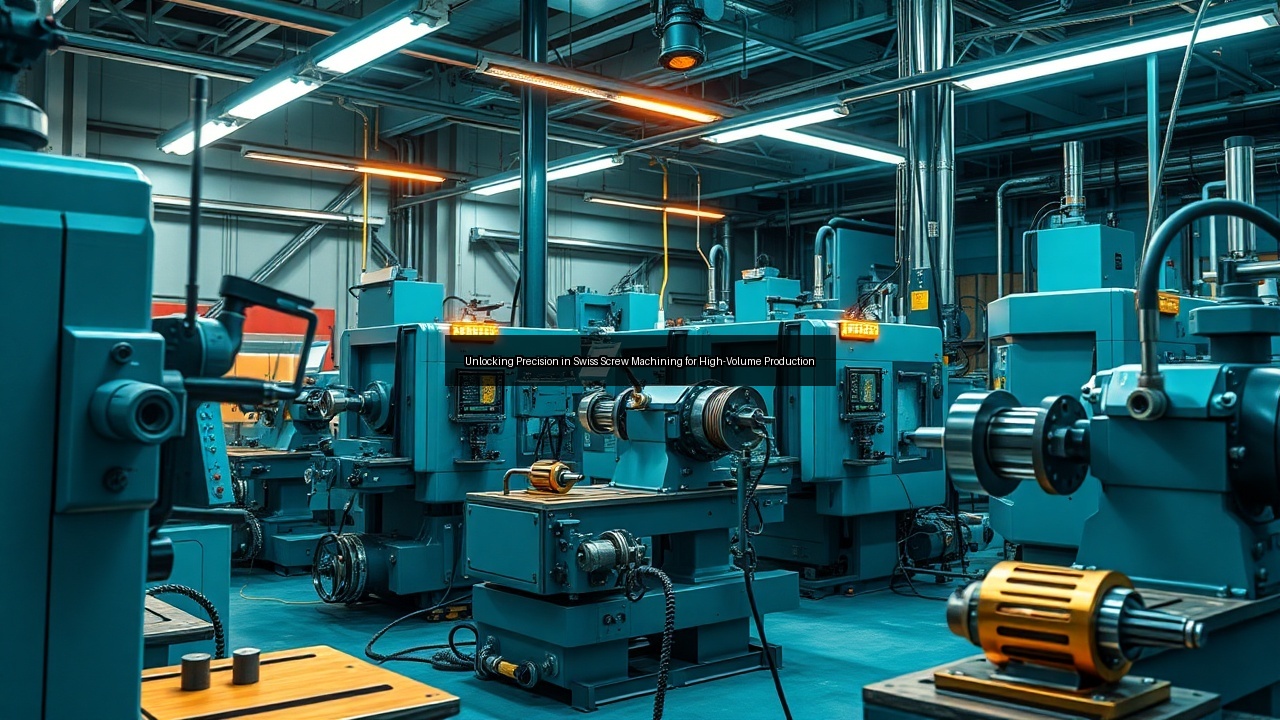
Understanding Swiss Screw Machining
What is Swiss Screw Machining?
Swiss screw machining produces small, intricate components with exceptional accuracy through a specialized turning process. Operators guide bar stock through a guide bushing that supports the material right next to the cutting tool, which reduces deflection during high-speed operations. This method excels at creating parts under 32mm in diameter for industries that demand tight tolerances. Swiss lathes form the core equipment, and manufacturers often combine them with a barfeeder to enable continuous runs without manual intervention. The technique evolved from traditional metalworking lathes but now handles complex geometries that once required multiple setups on a center lathe or turret lathes.
Modern facilities integrate swiss screw machining into automated lines that maintain consistent output across thousands of cycles. The process supports both simple pins and multi-featured shafts while keeping cycle times short. Engineers rely on it when standard cnc lathe methods fall short on precision or when part volume justifies dedicated screw machine cells.
Key Advantages of Swiss Screw Machining
Swiss screw machining delivers superior surface finishes and dimensional stability because the guide bushing minimizes vibration. Shops achieve tolerances within microns on diameters as small as 12mm without secondary grinding. A barfeeder keeps material fed automatically, so operators focus on quality checks rather than loading stock. This automation raises throughput on high-volume orders while cutting labor costs. The approach also reduces tool wear compared with conventional metalworking because each cut occurs close to the support point.
Manufacturers gain flexibility when they add live tooling to swiss lathes. One machine performs turning, drilling, and basic milling in a single cycle. The result is fewer part transfers, lower scrap rates, and faster delivery to customers who need screw machined components ready for assembly.
Common Applications in High-Volume Production
Medical device firms use swiss screw machining to create bone screws, surgical instrument shafts, and connector pins at scale. Automotive suppliers machine fuel injector components and sensor housings that must meet strict repeatability standards. Electronics manufacturers produce contact pins and connector bodies from 16mm stock with fine threads and cross holes. In each case, the process supports runs of tens of thousands while holding concentricity within 0.005mm. A tsugami swiss lathe equipped with a barfeeder often anchors these cells because it maintains accuracy across long production shifts. The same equipment handles watch components, aerospace fittings, and hydraulic valve spools when the design calls for extreme precision in small envelopes.
The Role of Machinery in Swiss Screw Machining
Overview of Swiss Lathes and Their Features
Swiss lathes differ from standard metalworking lathes because they feed material through a collet and guide bushing that travels with the headstock. This layout keeps the workpiece rigid even when cutting far from the chuck. Most models include multiple tool positions on both the main and sub spindles, allowing front and back operations without stopping the cycle. Tsugami models add rigid tapping and high-pressure coolant delivery to extend tool life during continuous runs. Operators program offsets directly at the control so adjustments happen quickly when material batches vary slightly. The compact footprint of a swiss lathe also lets plants pack more spindles into the same floor space compared with larger turret lathes or conventional cnc lathe setups.
Importance of Barfeeders in Automation
A barfeeder turns a swiss lathe into a lights-out production cell by delivering fresh bar stock automatically once the previous length finishes. Short-bar and long-bar versions both reduce operator touches, which lowers handling damage on precision screw machined parts. Modern units monitor remnant length and signal the machine when stock runs low, preventing crashes. When paired with a 12mm or 16mm capacity swiss screw machine, the barfeeder sustains cycle times under thirty seconds per part for simple geometries. Shops that integrate barfeeders with in-process gauging achieve higher overall equipment effectiveness because the line rarely stops for manual reloading. The investment pays back quickly on contracts that exceed fifty thousand pieces.
Comparing Swiss Lathes with CNC and Turret Lathes
A swiss lathe supports the workpiece at the cut point, whereas a cnc lathe or turret lathes hold the material farther away and risk deflection on slender parts. This difference lets swiss screw machining reach tighter tolerances on long, small-diameter components that would whip on a standard center lathe. Turret lathes offer faster tool changes for larger work, yet they lack the guide bushing stability needed for 12mm medical pins. CNC lathes handle bigger diameters efficiently but require extra setups for back-side features that a swiss machine completes in one cycle. Plants therefore select swiss lathes when part length exceeds diameter by more than three to one and when volume justifies the specialized tooling.
Precision and Efficiency in Swiss Screw Machining
Techniques for Achieving High Precision
Operators achieve micron-level accuracy in swiss screw machining by optimizing feed rates, selecting sharp carbide inserts, and maintaining consistent coolant pressure. They program the machine to take light finishing passes after roughing to remove any residual stress. In-process probing on the sub spindle verifies diameters before the part ejects, allowing automatic offset corrections. Shops also pre-stage tools in the turret so worn inserts swap during planned pauses rather than unplanned stops. These steps keep first-article approval quick and maintain cpk values above 1.67 across entire lots of screw machined connectors and shafts.
Utilizing Tailstock and Ejector Systems
The tailstock on a swiss lathe steadies longer parts during deep drilling or threading operations that would otherwise deflect. Combined with an ejector, the system pushes finished components into a collection chute without manual handling. This combination prevents bending on 16mm shafts and protects delicate threads from damage. Maintenance teams check ejector alignment weekly so parts exit cleanly and do not mar surfaces. When the tailstock engages at the right moment in the cycle, runout stays below 0.003mm even on parts that extend well beyond the guide bushing support.
The Impact of Material Selection on Machining Quality
Material choice directly affects surface finish and tool life in swiss screw machining. Free-machining stainless grades reduce built-up edge on cutting edges, while titanium alloys require coated tools and lower surface speeds to avoid work hardening. Brass and aluminum allow higher feeds yet demand careful chip control to prevent stringers from wrapping around the barfeeder. Shops match material certifications to each lot so dimensional changes from heat treatment remain predictable. Selecting the right grade upfront prevents scrap spikes and keeps the screw machine running at target efficiency for the full production run.
Advanced Features of Swiss Screw Machining
Integration of Y-Axis for Complex Machining
The y-axis on advanced swiss lathes adds off-center milling and drilling without rotating the part. Engineers program slots, flats, and cross holes directly into the cycle, eliminating secondary milling machines. This capability shines when producing medical housings or automotive sensor bodies that need precise features perpendicular to the main axis. Tsugami machines with full y-axis travel handle parts up to 16mm diameter while maintaining the same guide bushing support that defines swiss screw machining. The extra axis reduces total cycle time by 30 percent on many multi-feature components and removes the need for dedicated milling fixtures.
Threading Techniques in Screw Machining
Single-point threading on a swiss lathe creates accurate threads on small diameters where die heads would distort the workpiece. Live tooling allows thread whirling for high-helix medical bone screws in one pass. Operators adjust thread depth in 0.01mm increments at the control to hit pitch diameter tolerances without chasing. The process supports both right-hand and left-hand threads on the same part when the sub spindle reverses. Consistent coolant flow prevents chip packing in the thread roots, preserving surface quality across thousands of screw machined fasteners.
Drilling and Milling Capabilities in Swiss Screw Machines
Swiss screw machines equipped with driven tools perform deep hole drilling up to 20 times diameter using high-pressure coolant through the tool. Milling operations create hex flats, keyways, and gear teeth while the part remains supported by the guide bushing. Sub-spindle transfer lets the machine complete back-side drilling and threading without additional handling. These integrated capabilities turn a single swiss lathe into a complete cell that replaces multiple conventional machines, shortening lead times and lowering work-in-process inventory for high-volume contracts.
Challenges and Solutions in Swiss Screw Machining
Overcoming Limitations of 12mm and 16mm Components
Parts at 12mm and 16mm diameters challenge chip evacuation because the small cross section limits flute space. Shops counter this by using high-pressure coolant and peck drilling cycles that clear chips before they pack. Guide bushing selection becomes critical; a slightly oversized bushing reduces whip on 16mm stock while still providing support. Tool geometry adjustments, such as higher rake angles, prevent burrs that would require extra deburring steps. With these tweaks, operators maintain the same precision and cycle time that larger swiss screw machining jobs enjoy.
Maintenance Best Practices for Longevity
Daily lubrication checks on the guide bushing and collet prevent premature wear that would degrade part accuracy. Weekly inspection of the ejector and tailstock alignment catches misalignment before it affects concentricity. Filter changes on the coolant system stop abrasive particles from scoring sliding surfaces inside the swiss lathe. Documenting tool life and spindle load trends helps predict when bearings need replacement, avoiding unplanned downtime during critical production windows. These routines extend machine life well beyond 50,000 hours while protecting the investment in swiss screw machining capacity.
Future Trends in Swiss Machining Technology
Next-generation swiss lathes incorporate in-machine laser measurement and adaptive control that adjusts feeds in real time based on actual cutting forces. Hybrid additive heads begin to appear on some models, allowing deposition of wear-resistant coatings directly onto screw machined parts before final turning. Connectivity through MTConnect feeds production data to enterprise systems so planners optimize barfeeder scheduling across multiple machines. These advances keep swiss screw machining competitive for even tighter tolerances and smaller diameters as medical and electronics designs continue to shrink.