The Rise of Custom Performance Motors in American Manufacturing
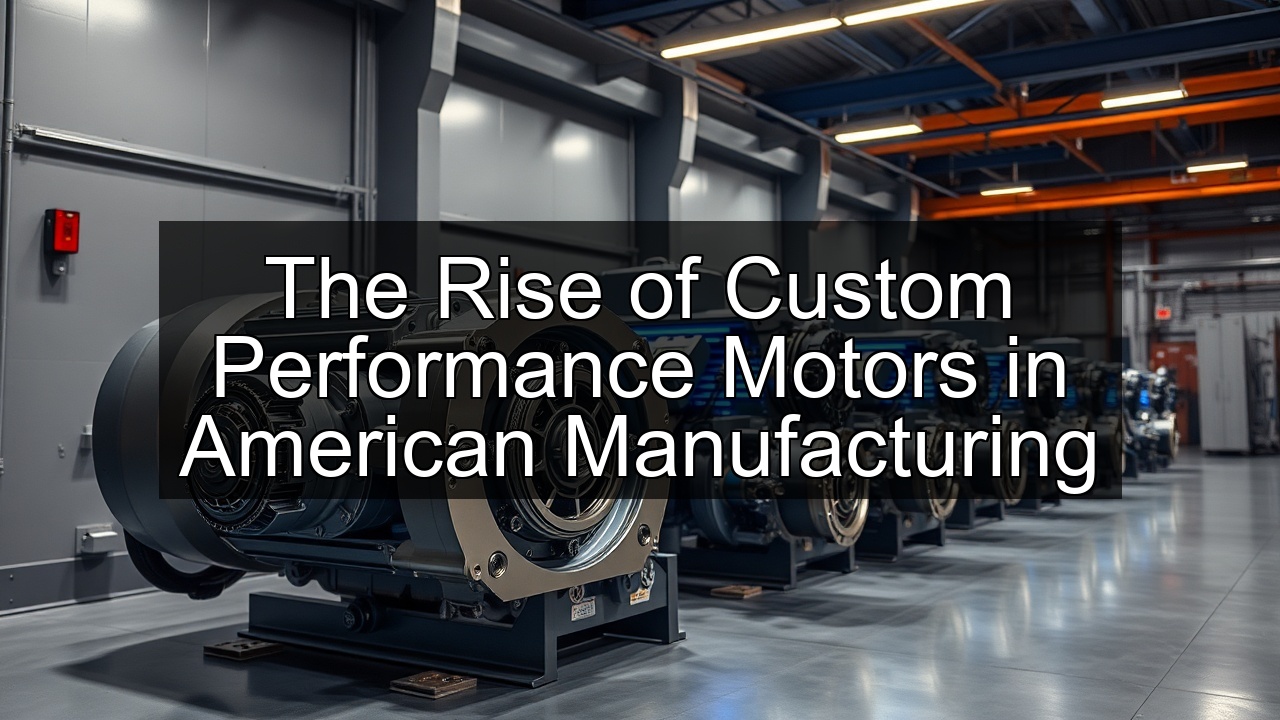
The Evolution of Custom Performance Motors in America
Historical Overview of Motor Manufacturing
The journey of motor manufacturing in America began in the late 19th century, with the advent of electric motors that revolutionized industries. Early motors were primarily AC motors, designed for simplicity and efficiency in various applications. Over the decades, manufacturers introduced DC motors, which offered advantages in speed control and torque. The development of the National Electrical Manufacturers Association (NEMA) standards helped shape the quality and compatibility of these motors, allowing for broader adoption across industries. As technology evolved, so did consumer expectations. The demand for more specialized solutions paved the way for custom motors, tailored to meet specific operational needs. By the 21st century, the landscape of motor manufacturing had shifted dramatically, emphasizing customization and performance over mere function.
The Shift Towards Customization
The shift towards customization marked a pivotal moment in motor manufacturing. Manufacturers began to recognize that one-size-fits-all solutions often fell short of meeting the unique demands of various applications. Custom motors emerged as a response to this gap, enabling businesses to tailor specifications, such as size, weight, power, and efficiency. This trend accelerated with the rise of advanced engineering technologies that allowed mechanical engineers to design and produce motors that fulfilled precise requirements. Industries like HVAC, oil and gas, and wastewater management have particularly benefited from custom solutions. The ability to optimize parameters such as torque, voltage, and temperature has made custom performance motors indispensable in modern manufacturing.
Key Players in the Custom Motor Industry
Types of Custom Motors and Their Applications
AC Motors vs. DC Motors: The Customization Landscape
When exploring the landscape of custom motors, understanding the differences between AC and DC motors is crucial. AC motors, known for their reliability and longevity, are commonly used in industrial applications. They excel in environments requiring continuous operation, such as HVAC systems and large manufacturing facilities. On the other hand, DC motors provide enhanced control over speed and torque, making them ideal for applications involving robotics and precision machinery. Custom AC and DC motors can be designed to specific voltage and inductance requirements, catering to unique operational demands. The choice between these motor types often hinges on the specific application, with many industries opting for customized solutions to maximize efficiency and performance.
Brushless DC Motors and Their Advantages
Brushless DC motors (BLDC motors) have gained considerable traction in the custom motors market due to their numerous advantages. Unlike traditional brushed motors, BLDC motors employ permanent magnets and electronic commutation, eliminating the need for brushes. This design enhances their lifespan, reduces maintenance, and improves efficiency. Custom BLDC motors can be engineered to meet specific torque and speed requirements, making them suitable for various applications, including electric vehicles and aerospace. The ability to operate at higher temperatures and voltages further solidifies their position in demanding environments. Engineers appreciate the versatility of brushless motors, often incorporating them into advanced systems where precision and reliability are paramount.
Torque Motors in Industrial Applications
Torque motors play a vital role in various industrial applications, particularly in scenarios requiring high torque at low speeds. These custom motors are designed to provide consistent performance, making them ideal for conveyor systems, robotics, and automated machinery. Custom torque motors can be tailored to specific requirements, including size, weight, and operational efficiency. Industries such as oil and gas and wastewater management rely heavily on torque motors for their ability to handle demanding tasks. The engineering behind these motors focuses on custom motor parts maximizing torque output while managing temperature and ensuring reliability under challenging conditions. As manufacturers continue to seek more efficient solutions, the demand for custom torque motors in industrial applications is set to rise.
Engineering Innovations Driving Custom Motors
The Role of Mechanical Engineers in Custom Motor Design
Mechanical engineers serve as the backbone of custom motor design, bringing together a blend of creativity and technical expertise. Their role encompasses everything from initial concept development to final production. Engineers analyze operational requirements, considering factors such as load, speed, and environmental conditions. This data informs the design process, allowing for the creation of custom motors that meet specific needs. Collaboration with manufacturers and distributors ensures that these motors align with industry standards, such as those set by IEC and NEMA. As engineering innovations continue to emerge, mechanical engineers remain at the forefront, pushing the boundaries of what custom motors can achieve in various applications.
Advancements in Bearing Technologies
Advancements in bearing technologies have significantly influenced the performance and reliability of custom motors. Bearings reduce friction and wear, enhancing motor lifespan and efficiency. Engineers now have access to a wide range of bearing types, including ceramic, ball, and roller bearings, each offering unique advantages. Innovations in materials and manufacturing techniques have led to the development of bearings that can withstand extreme temperatures and loads. Custom motor designs often incorporate these advanced bearings to ensure optimal performance, particularly in high-demand applications such as industrial machinery and automotive systems. As technology progresses, the integration of cutting-edge bearing solutions will continue to elevate the capabilities of custom motors.
Temperature and Voltage Considerations in Custom Builds
Temperature and voltage are critical factors in the design and functionality of custom motors. Engineers must consider the operating environment and the specific requirements of each application when designing motors. High temperatures can impact motor efficiency and lifespan, necessitating the use of materials that can withstand heat. Voltage levels also play a significant role, affecting everything from motor performance to safety. Custom motors can be tailored to operate efficiently across a range of voltage inputs, ensuring compatibility with various systems. By addressing these considerations, engineers create motors that not only meet but exceed performance expectations, solidifying the role of custom motors in modern manufacturing.
The Future of Custom Motors in American Manufacturing
Emerging Trends in Custom Performance Motors
The future of custom performance motors looks promising, with several emerging trends shaping the market. Increased automation and the rise of smart technology drive the demand for motors that integrate seamlessly with digital systems. The push for sustainability also influences motor design, as manufacturers seek to create energy-efficient solutions that minimize environmental impact. Custom motors will likely incorporate advanced features such as IoT connectivity, enabling real-time monitoring and optimization. As industries evolve, customization will remain a key driver, allowing businesses to adapt to changing demands and maintain a competitive edge.
Challenges Faced by Custom Motor Distributors
Custom motor distributors face various challenges in the rapidly evolving landscape of American manufacturing. Sourcing high-quality components that meet specific customization requirements can be difficult, particularly as supply chains experience disruptions. Additionally, staying ahead of technological advancements necessitates continuous investment in training and resources. Distributors must also navigate complex customer demands, ensuring they provide tailored solutions while maintaining efficiency. As the market for custom motors expands, addressing these challenges will be essential for distributors to thrive and sustain growth.
Impact of Custom Motors on Industries like Oil and Gas and Wastewater
Custom motors play a transformative role in industries such as oil and gas and wastewater management. In the oil and gas sector, custom motors drive essential processes, from drilling to refining. Their ability to handle high torque and operate under extreme conditions makes them invaluable. Similarly, in wastewater management, custom motors power pumps and treatment systems, ensuring efficient operation and compliance with regulatory standards. The integration of advanced technologies in custom motors enhances efficiency and reliability, allowing these industries to meet growing demands while minimizing environmental impact. The continued evolution of custom motors will significantly influence the future of these critical sectors.