How Electropolishing Enhances Corrosion Resistance in 316L Stainless Steel
Understanding Electropolishing and Its Importance
What is Electropolishing?
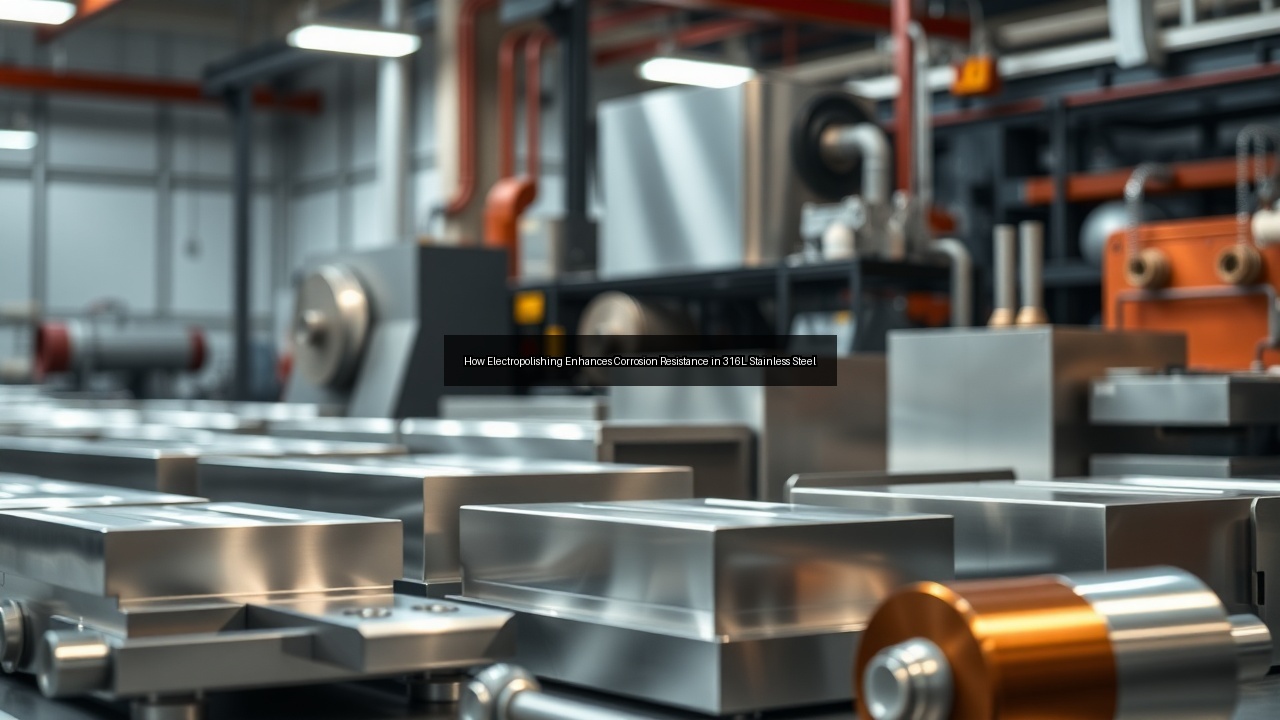
Electropolishing removes microscopic layers from metal surfaces through an electrochemical process that smooths and refines stainless steel products. Manufacturers apply this technique to achieve a mirror-like finish on components made from 316L stainless steel. The method dissolves high points on the surface while leaving valleys intact, which creates a uniform topography. Engineers rely on electropolishing stainless steel services to prepare parts for demanding environments where precision matters. This polishing step eliminates embedded particles and burrs left from machining. Clients in various sectors turn to specialized providers for consistent results that standard mechanical polishing cannot match. Electropolish treatments prepare stainless steels for further assembly or direct use in critical systems.
The Science Behind Electropolishing
An electrolyte bath and controlled electrical current drive the electropolishing reaction on stainless steel. The anode connection to the workpiece causes metal ions to migrate into the solution, leveling peaks preferentially. Oxygen evolution at the surface assists in breaking down oxides and contaminants. This electrochemical action improves corrosion resistance by exposing a chromium-rich layer that forms a stable passive film. Technicians adjust voltage, time, and temperature to match the alloy composition of 316L. The process avoids mechanical stress that grinding introduces, preserving the material's integrity. Providers of electropolishing stainless steel services monitor current density closely to prevent over-etching while maximizing surface smoothness.
Key Benefits of Electropolishing for Metals
Electropolishing delivers enhanced corrosion resistance, reduced friction, and easier cleaning across multiple metals including stainless steels. The refined surface finish minimizes sites where moisture or chemicals can initiate pitting. Stainless steel products treated this way resist bacterial adhesion and scale buildup more effectively. Manufacturers note improved fatigue life because the process removes micro-cracks and inclusions. Electropolishing stainless steel services also enhance weldability and reduce outgassing in vacuum applications. Clients observe longer service intervals for equipment after treatment. The technique works on complex geometries that mechanical methods cannot reach uniformly, delivering consistent quality across batches.
Electropolishing 316L Stainless Steel: A Closer Look
Properties of 316L Stainless Steel
316L stainless steel offers low carbon content that resists sensitization during welding and strong resistance to chlorides thanks to molybdenum additions. This alloy maintains ductility and toughness at elevated temperatures. Engineers select it for applications requiring both strength and biocompatibility. The material forms a natural chromium oxide layer that provides baseline corrosion resistance. However, surface irregularities from fabrication limit its full performance potential. Electropolishing stainless steel services unlock superior characteristics by refining the outer layer. 316L responds well to electrochemical treatment, yielding finishes that exceed those of other stainless steels in purity and smoothness.
How Electropolishing Enhances Corrosion Resistance
Electropolishing strips away deformed surface metal and embedded iron particles that act as corrosion initiation points. The resulting passive film on 316L grows thicker and more uniform because the process enriches chromium at the surface. This electrochemical polishing reduces the number of crevices where chlorides concentrate. Manufacturers document dramatic improvements in salt spray and acid exposure tests after treatment. Electropolishing stainless steel services eliminate heat tint and oxide scales that compromise the alloy's natural defenses. The smoother topography lowers the corrosion current density under operating conditions. Parts treated this way maintain integrity longer in aggressive media such as seawater or pharmaceutical solutions.
The Role of Surface Finish in Corrosion Resistance
Surface finish directly controls how quickly corrosion begins on stainless steel. Rough textures trap contaminants and create micro-environments that accelerate attack. Electropolishing achieves Ra values below 0.1 micrometers, far smoother than mechanical polishing. This finish reduces the effective surface area exposed to electrolytes. Providers of electropolishing stainless steel services measure and certify roughness parameters to guarantee performance. A refined surface also promotes rapid repassivation after minor damage. In practice, smoother finishes on 316L translate to lower maintenance costs and fewer replacements. The connection between topography and corrosion rate remains one of the most reliable predictors of component longevity.
Electropolishing Process and Techniques
Steps Involved in Electropolishing
The electropolishing sequence begins with thorough cleaning to remove oils and particulates from stainless steel products. Workers then rack parts for electrical contact and immerse them in the electrolyte tank. A direct current flows for a programmed duration while agitation maintains uniform ion removal. Rinsing follows to neutralize residues, followed by drying and inspection. Electropolishing stainless steel services include pre- and post-treatment metrology to verify dimensions and finish quality. Operators document every parameter to ensure repeatability across production runs. Final passivation sometimes complements the process to lock in the improved corrosion resistance.
Common Chemicals Used in Electropolishing
Phosphoric and sulfuric acid mixtures dominate electrolyte formulations for stainless steel electropolishing. These solutions dissolve iron preferentially while protecting the chromium and nickel matrix. Additives control viscosity and improve throwing power into recesses. Temperature control between 50 and 80 degrees Celsius optimizes reaction kinetics. Providers of electropolishing stainless steel services recycle electrolytes to maintain consistent chemistry and reduce waste. Safety protocols govern handling because the acids are aggressive. Alternative formulations exist for specialized alloys, yet the standard blend delivers reliable results on 316L across industries.
Heat Treating and Its Impact on Electropolishing
Heat treating alters microstructure and can introduce scale that electropolishing must remove. Solution annealing followed by rapid cooling preserves corrosion resistance in 316L before polishing begins. Excessive temperatures during prior processing may embed oxides that require longer electropolish cycles. Manufacturers coordinate heat treating schedules with downstream electropolishing stainless steel services to minimize material loss. Proper sequencing ensures the final surface finish meets specifications without dimensional distortion. The interplay between thermal history and electrochemical removal demands careful planning by engineering teams.
Applications of Electropolished 316L Stainless Steel
Use in Semiconductor Manufacturing
Semiconductor equipment demands ultra-clean surfaces to prevent particle contamination. Electropolished 316L tubing and fittings reduce outgassing and trap fewer impurities. The smooth finish facilitates laminar gas flow and simplifies validation. Manufacturers of semiconductor tools specify electropolishing stainless steel services to achieve the required purity levels. Components treated this way withstand aggressive cleaning chemicals without degradation. Consistent surface quality supports higher yields in wafer fabrication processes.
Electropolished Stainless Steel in Medical Devices
Medical device makers electropolish 316L implants and surgical instruments to enhance biocompatibility and corrosion resistance. The process removes burrs that could damage tissue and creates a surface that resists pitting in bodily fluids. Electropolishing stainless steel services also improve fatigue performance under cyclic loading. Regulatory bodies recognize the finish as a validated method for reducing metallic ion release. Devices treated accordingly demonstrate extended functional life in clinical use.
Benefits for Food and Beverage Industries
Food processing equipment benefits from electropolished surfaces that clean easily and resist bacterial colonization. 316L stainless steel tanks and piping treated by electropolishing stainless steel services maintain product purity and reduce cleaning downtime. The finish withstands caustic sanitizers without surface attack. Processors report fewer product recalls linked to corrosion-related contamination after adopting the treatment. Consistent application across stainless steel products supports compliance with hygiene standards.
Choosing the Right Electropolishing Stainless Steel Services
Factors to Consider When Selecting a Manufacturer
Experience with 316L and documented process controls rank highest when evaluating electropolishing stainless steel services. Clients examine rack design capabilities, electrolyte management, and post-process inspection methods. Turnaround time and capacity must align with production schedules. Manufacturers that integrate electropolishing with prior heat treating steps deliver better overall outcomes. References from semiconductor and medical sectors provide reliable indicators of consistent quality.
Quality Control in Electropolishing Services
Robust quality systems track every parameter from incoming material certification through final roughness measurement. Electropolishing stainless steel services employ profilometers, visual standards, and corrosion testing coupons. Traceability records link each batch to specific process data. Deviations trigger immediate review to protect corrosion resistance performance. Leading providers maintain ISO certifications that validate their controls.
Future Trends in Electropolishing Technology
Automation and real-time monitoring now appear in advanced electropolishing stainless steel services. Pulse current techniques shorten cycle times while preserving finish quality. Environmentally friendlier electrolytes continue to emerge as regulations tighten. Integration with additive manufacturing workflows promises new applications for 316L components. These developments will further expand the role of electropolishing in achieving superior corrosion resistance across industries.
See Also
- Electropolished vs Polished Stainless Steel Which is Right for Your Project
- The Science Behind Electropolishing and Its Impact on Surface Finish
- Revolutionizing Engineering with Electropolishing Techniques for Metals
- Exploring the Aesthetic and Functional Advantages of Electropolished Stainless Steel
- From Heat Treating to Electropolishing How to Achieve Superior Metal Finishes