Decoding Partial Discharge in Transformers for Better Performance Insights
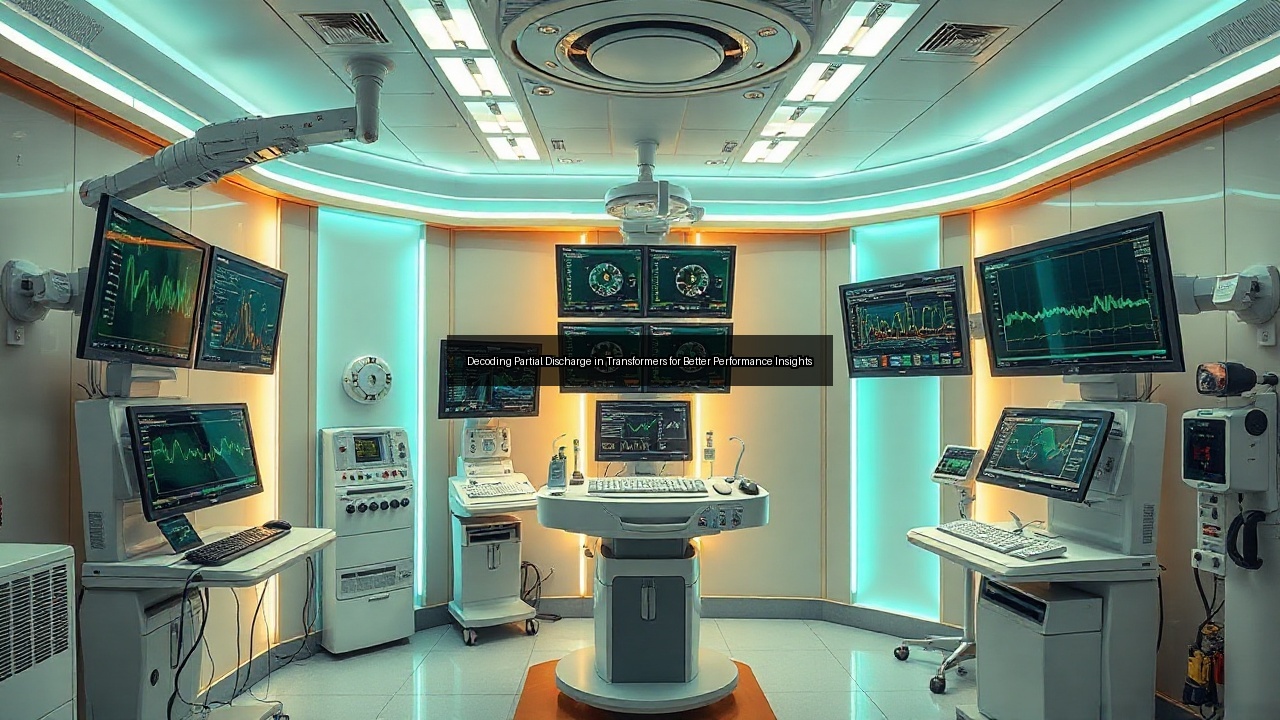
Understanding Partial Discharge in Transformers
What is Partial Discharge?
Partial discharge occurs when localized electrical stress exceeds the dielectric strength of insulation inside a transformer without creating a complete breakdown. Engineers detect this phenomenon through high-frequency signals that travel along conductors and through the oil or solid insulation. The process starts at voids, cracks, or contaminants where electric field intensity peaks. Over time, repeated discharges erode insulation layers and accelerate aging. Operators rely on a transformer monitor to capture these pulses in real time. Data from the monitor reveals discharge magnitude, repetition rate, and phase angle relative to the voltage waveform. Accurate interpretation distinguishes harmless corona from harmful internal activity. Modern systems combine ultra-high-frequency sensors with acoustic detectors to locate the source inside the winding or bushing. Continuous recording allows trending that shows whether activity remains stable or escalates. When engineers understand these patterns, they schedule targeted repairs before catastrophic failure develops. Regular baseline measurements establish normal behavior for each specific transformer unit.
The Importance of Monitoring Partial Discharge
Monitoring partial discharge protects asset health and prevents unplanned outages that cost utilities millions. Early detection reveals insulation defects that conventional tests miss during routine inspections. A reliable transformer monitor records activity under load, capturing stress conditions that offline tests cannot replicate. Trending data helps engineers forecast remaining life and prioritize maintenance across large fleets. Utilities integrate these readings into asset management platforms so planners allocate resources efficiently. Regulatory bodies now expect documented condition data for critical power transformers. Insurance providers also review monitoring records before settling claims on equipment damage. When operators act on rising discharge levels, they replace contaminated oil or tighten connections before faults propagate. This proactive stance extends service intervals and improves overall grid reliability. Consistent monitoring further supports compliance with international standards that require evidence of insulation integrity.
The Role of Transformer Monitors in Condition Monitoring
Types of Transformer Monitors
Transformer monitors fall into three main categories: portable diagnostic units, permanently installed online systems, and hybrid platforms that combine both. Portable units suit periodic surveys on less critical distribution assets. Online systems stay connected continuously and stream data to control centers through secure networks. Hybrid solutions allow flexible deployment where engineers move sensors between multiple transformers during commissioning or after suspected events. Each type measures partial discharge alongside temperature, moisture, and load current. Advanced models incorporate dissolved gas analysis sensors that correlate gas generation with discharge activity. Operators choose monitor types based on voltage class, accessibility, and budget constraints. Fleet managers often standardize on one platform to simplify training and data integration across substations.
Key Features of Distribution Transformer Monitors
Distribution transformer monitors emphasize compact design, wireless connectivity, and low power consumption. These units mount directly on the tank or nearby poles without extensive cabling. Built-in algorithms filter noise from switching operations and radio interference common in urban environments. Engineers value features such as automatic alarm thresholds that trigger when partial discharge exceeds preset limits. Many models offer cloud dashboards that display trend graphs and event waveforms accessible from any location. Battery backup ensures data collection continues during auxiliary supply interruptions. Rugged enclosures withstand temperature extremes and corrosive atmospheres typical of outdoor installations. Integration with SCADA systems allows operators to correlate discharge events with load changes instantly. These practical capabilities make distribution transformer monitor deployments cost-effective for widespread networks.
Integration with Diagnostic Tools
Effective condition monitoring requires seamless integration between the transformer monitor and complementary diagnostic tools. Software platforms merge partial discharge data with frequency response analysis results and thermal images captured during the same inspection window. Engineers cross-reference these datasets to confirm whether elevated discharge coincides with hot spots or mechanical deformation. API connections feed information into enterprise asset management systems that generate work orders automatically. Field technicians use tablet applications that overlay monitor alerts on single-line diagrams for quick navigation to affected components. Calibration routines ensure sensors maintain accuracy across temperature swings and varying loads. This unified approach reduces false positives and accelerates root-cause analysis when anomalies appear.
Predictive Maintenance Strategies Using Partial Discharge Analysis
Benefits of Predictive Maintenance in Transformers
Predictive maintenance replaces fixed-interval overhauls with data-driven decisions that cut costs and raise availability. Partial discharge analysis supplies the earliest reliable indicator of insulation distress, allowing repairs during scheduled outages rather than emergency shutdowns. Utilities report fewer catastrophic failures and lower spare-parts inventory once they adopt continuous monitoring. Engineers optimize loading profiles to reduce stress on aging units flagged by rising activity. The strategy also supports environmental goals by extending equipment life and deferring new manufacturing. Financial models show positive return on investment within two years when a transformer monitor prevents even one major failure. Staff morale improves because crews perform planned work instead of reactive crisis response.
Implementing a Monitoring System for Early Detection
Implementation begins with a site survey that identifies high-risk transformers based on age, loading history, and past test results. Engineers install sensors at bushing taps, neutral points, and tank walls to achieve comprehensive coverage. Commissioning includes baseline partial discharge mapping under normal operating conditions. Thresholds are set conservatively at first, then refined after several months of data collection. Training programs teach operators how to interpret pulse patterns and escalate alerts through defined workflows. Data validation routines compare monitor outputs against periodic offline tests to maintain confidence. Successful rollouts include quarterly reviews where teams adjust sensitivity settings and expand coverage to additional units.
Case Studies of Successful Predictive Maintenance
One utility avoided a 230 kV transformer replacement after its monitor detected increasing partial discharge near the high-voltage winding. Targeted oil reclamation and bushing replacement restored insulation strength and returned the unit to service. Another operator used distribution transformer monitor data to identify loose connections on multiple 33 kV units before flashover occurred. In both cases, documented savings exceeded the entire monitoring program cost. These examples illustrate how early intervention preserves capital while maintaining supply reliability across diverse voltage classes.
Comparing Different Types of Transformers and Their Monitoring Needs
Power Transformers vs. Dry Type Transformers
Power transformers operate at transmission voltages and contain large oil volumes that serve as both coolant and insulation. Their size and criticality justify sophisticated online monitoring systems with multiple sensor arrays. Dry type transformers rely on air or cast-resin insulation and typically serve lower-voltage distribution duties. They experience different stress profiles because they lack oil to suppress discharge. Engineers therefore adapt sensor placement and alarm logic when moving from oil-filled power transformers to dry type units. The absence of oil also changes gas analysis options, shifting emphasis toward acoustic and electromagnetic methods.
Monitoring Challenges Specific to Dry Type Transformers
Dry type transformers present unique monitoring challenges because resin surfaces can accumulate conductive contamination that masks genuine partial discharge signals. Ambient temperature swings affect discharge inception voltage more dramatically than in oil-filled designs. Limited access to internal windings restricts sensor locations, requiring creative external mounting strategies. Engineers compensate by combining multiple technologies and applying stricter filtering algorithms. Despite these hurdles, a well-configured transformer monitor still delivers actionable early warnings on dry type assets when properly calibrated.
Best Practices for Monitoring Power Transformers
Best practices start with redundant sensors on critical bushings and neutral connections of power transformers. Operators schedule annual verification of monitor calibration against certified reference sources. They maintain detailed logs that correlate discharge activity with load cycles, ambient conditions, and tap changer operations. Regular review meetings bring together protection engineers, maintenance crews, and data analysts to refine alarm settings. This disciplined approach maximizes the value extracted from every transformer monitor deployed across the high-voltage fleet.
See Also
- How Smart Monitoring Systems are Transforming the Future of Power Distribution
- Unlocking the Secrets of Your Transformer Health through Predictive Maintenance
- The Role of Condition Monitoring in Enhancing Transformer Longevity
- Revolutionizing Power Management with Advanced Transformer Monitoring Solutions